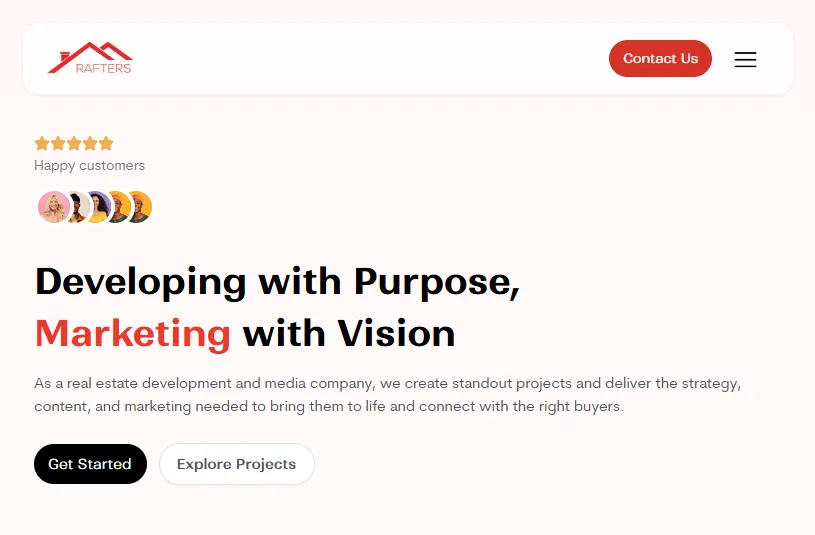
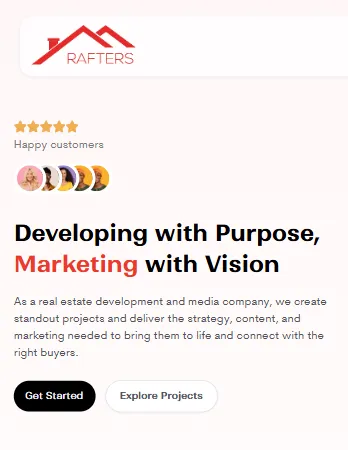
The RaftersNG project was completed over a four-week development period, followed by additional time for final refinements and launch preparation. Early in the process, after the first week of development, we deployed a landing page featuring a “Coming Soon” section and key information. This allowed the platform to establish an online presence while full development continued in the background.
The project began with a collaborative design handoff, where the client’s team provided detailed UI designs and direction for the platform. Working closely with a product designer, I translated these designs into a fully functional WordPress website, ensuring consistency with the intended user experience across all pages.
Using modern front-end development practices, I built responsive layouts, implemented dynamic property listing features, and optimized the site for performance and accessibility. Throughout the process, there was ongoing communication and iteration to ensure alignment with project goals.
After development, a thorough QA and testing phase was carried out to validate functionality, responsiveness, and design accuracy. Feedback was incorporated through minor refinements, and the project progressed smoothly without major setbacks.
The result was a scalable, user-friendly real estate platform successfully designed, developed, and prepared for launch within the project timeline